Showing posts with label parenting. Show all posts

1.17.2011

My Baby's Hydration

If you remember chemistry very well, you will know that water, or H2O (pardon the text), is the world's universal solvent. In fact, our body consists of almost 60% water, but this is dependent to our body's proportion. The water content in our body is subdivided into two compartments: intracellular fluid (cytosol or cytoplasmic matrix), the liquid found in our cells; the other one is extracellular fluid (ECF), is the fluid found outside our cells. Extracellular is further subdivided into plasma, interstitial fluid, transcellular fluid.

Ok, before I even go deeper (which is not my intent here), it's obvious we need to be hydrated every time. Hydrated individual's capability to maintain electrolyte balance is important since it helps our general well-being. Even a slight dehydration will show instantaneous symptoms – thirst, lethargy, and minimal urine output – symptoms that appeared when my son started vomiting two days ago.

It’s not a super duper vomit, but a little vomit several times a day definitely will take a toll on his health. Result? A slight fever the night after.

What to do, what to do? I don’t need panic driving my veins. I just need a clear head to do certain things to ensure he would be able to stand those vomiting episodes.

Problem is, he doesn’t eat, doesn’t drink his milk. Uh-oh. It took a lot of coaxing to make him swallow anything. The only thing he would do is drink water – good sign. But that too makes him vomit. My own diagnosis: stomach flu. I mean, he was ok before that first vomit. I didn’t see any sign, not even a fever, not an iota of indication that he is under the weather. Before that gag.

I know it’s too presumptuous of me to even think of just making that diagnose, but just to be certain, I made an appointment with a pediatrician. So, we’ll see what will happen tomorrow.

For now, I’m just thankful to two drinks – one is Yakult. He drank it and it never gagged up. Two, the most important is the Pedialyte. I’m just glad that they were able to make this ORS in pop forms. My son wouldn’t even take one sip before, but now I was able to persuade him on this ‘ice candy’.

Result? Lethargy gone. Not one vomit since he got his Pedialyte intake. And starting to be his delightful self again.

Now you tell me if it's easy being mom.


4.08.2010

Remedies for Rashes

This is a Sponsored Post written by me on behalf of Boudreaux's Butt Paste. All opinions are 100% mine.

One of the things that moms like me anticipate during diaper years are rashes that can sometimes be persistent, make the kids irritable and grumpy, not to mention that rashes are painful too.  Although it is a part of a baby's life, it really depends on the mom what to use during the baby years, either in cloth or disposable nappies.  But there are certain things that can be done to minimize the occurrence of the rashes, and one does not have to go to the doctor just to make it go away.

Change diapers before it gets too soiled.  I know that diapers can be expensive, but scrimping on nappies can lead to irritation.  Don't change the diapers when it is too heavy and soiled, change it when its wet (a mom always know when it's time to change, though). 

Wash your baby's bottom each time you change diapers.  It's very important to do this to minimize irritation.  Remember that urine is acidic, and to just change without washing will make those bacteria thrive.  Wipes are definite no-no since most wipes have alcohol content in them thus irritating the skin all the more.

If the skin starts to go red (meaning irritation and rashes is starting), either from diapers or from being washed too often (in cases when the baby has diarrhea), apply ointment right away.  It is a must to be watchful in these instances because a minor irritation can mean a whiny baby.  Apply some ointment right away on the irritated skin to prevent it from going further.  A good ointment is one with zinc oxide since it acts as a barrier on the skin to outside irritants.  One good product to use is the Boudreaux’s Butt Paste which is widely available and safe to use (for free sample, click here).

The key to preventing a diaper irritation is to keep it from getting worse and using the right kind of treatment may it be in products or home remedies.  Just being alert to any signs of rashes is good enough to avoid any further complications.  As always, prevention is better than cure.

Visit my sponsor: Boudreaux’s Butt Paste

3.02.2010

Child Care

I'm a mom.  I've had extensive medical background (from having family and relatives in the medical field, to studying several ones, reading time and again basics, procedures and how-tos of common ailments), I'm a certified first-aider and I have basic knowledge on acupressure/reflexology and herbs.  I just lack the 'badge' to make me legit and certified.

But time again and again, I stumble when it comes to my kids.

They have allergic rhinitis and I know how to take care and make sure that they don't have episodes of it.  I've been so lucky for some time now, but since last week (see how the lag of my blog?), my youngest not only got the colds and cough but the flu.

My worrisome self doubted again my capacity to take good care of my child in his sick time.  I worried sick seeing him not eating and drinking well and I can't even make him take a simple fever-reducing med.  My only option when he got the fever was to tone it down by being vigilant and putting a cold face towel on his head.  And this woke me all night.

Since last week, his colds became this cough with phlegm which makes him vomit and wakes him up in the middle of the night (allergy symptoms).  I was hoping to get him to a pediatrician as soon as I can but the most recent appointment we had was yesterday.

When we got to the pedia, we were given several puffing meds to control his 'asthma'.  Ok, quote and quote.  I mean, I know it's allergy, but I won't classify it as asthma.  But, it's doctor's orders and assumptions, she's got the diploma for it, so who am I to argue?

When we got home and I started going over the meds my son have to take - two different puffing meds, 1 tablet to be dissolved with his milk, an allergic rhinitis nasal spray, another syrup for allergy, and saline drops.

The first puff med, I think I would want my child to take since it's a bronchodilator, meaning it would open up his bronchi, it would be easier for phlegm to come out when he coughs.  The other puff med, I don't know if I want to because it is a steroid (for asthma, and to reiterate, I do think my child doesn't have an asthma yet) and taking this kind of drug may not only affect his lungs in the long run but his overall system as well.

The rhinitis nasal spray, I'm not spraying unless I have to, because it would break his nasals - the saline drops is better since it's very gentle and serves a similar purpose minus the side effects (I was on prescriptive nasal sprays before and it heightened my sensitive sinuses all the more).  I think it's better to opt for the neti-pot.

So, here I am, breaking the pedia's rules and doing my own.  When I looked through his meds, I was talking to myself and saying, hey!  You can do better than making your kid go through all this meds.  So now, I'm doing my rules.

Sweep the room for dust mites every now and then, humidify the room to ease congestion, rubbing his chest and back with vaporub (as well as his feet - they said that putting vaporub on the feet will protect - and to think that our feet is like our whole body system, as have been said in acupressure and reflexology).  Mix his milk with vitamin C to boost his immune system and do gentle massages.

Of course, since he's every bit cranky when it comes to taking any kind of meds, I'm still thinking how am I going to make him take the puff med.  My confidence is up again to child care.

12.16.2009

Helping To Cope With Speech Delay

My youngest is two years and less than a month old, but all he can do at this time is utter a few words. How can I make him talk? Here's what I've read:

Read to your son. Don't read the book straight through. Instead, make the reading an interactive triangle between you, the book, and your son. Keep the reading lively; use your imagination to bring the story and characters to life. Give your son time to talk about the pictures he sees on the pages.

Recite nursery rhymes. These rhymes with their repetition and rhythm provide verbal gymnastics that will help your son improve his language skills. "Hey Diddle the Cat and the Fiddle," "Hickory Dickory Dock," and "Humpty Dumpty" are great starters.

Describe your actions. Whether working on your computer, washing the dishes, changing your son's diaper, or giving him a bath, describe to him what you're doing. Use short sentences but don't shorten your vocabulary. The more words your child hears and sees in action, the better.

Describe your son's actions, too. As your son plays with cars and trucks, put language to his activities: "You're moving your truck along the floor. It's going fast." You provide a play-by-play commentary similar to a sports announcer describing a baseball and or basketball game.

Reiterate what your son says. For example, if he points to the family's kitty and says, "Kiy, Kiy," your response could be, "Yes, that's the kitty. Do you think he's hungry?" With this approach he hears the word "kitty" pronounced correctly and is taught that people need to care for their animals.

Sing songs with your son. Just about any will do. If you're inclined to buy a CD, look for ones by Ella Jenkins or Raffi. These artists provide simple sing-alongs for the whole family. They use dance, song, and instruments for fun and learning.

Make requests. "Give me the ball." "Find your shoes." "Bring me a book. I'll read it to you." Remember that children's receptive language (what they understand) is far better than their expressive language (what they say). That's why they need to hear and see language in use.

Ask questions. "Where's mommy's purse?" "What's the kitty doing?" If he doesn't respond, provide the answer yourself. He will answer you with time.

Make corrections in context. If your child says, "I have two foots," respond, "Yes, you have two feet." If he says, "I goed to the store," simply say, "Yes, you went to the store." If your child mispronounces a letter such as "L" or "R", there's no need to worry; simply pronounce the work correctly. He'll soon improve.

If English is your son's second language, you'll want to use both languages with him. Although two languages take longer for a child to learn, children benefit from learning both languages simultaneously.

Jan Faull, MEd, is a veteran parent educator and the author of four parenting books, including Darn Good Advice -- Baby and Darn Good Advice -- Parenting. She writes a biweekly parenting advice column for this site and a weekly parenting advice column in the Seattle Times. Jan Faull is the mother of three grown children and lives in the Seattle area.

Originally published on HealthyKids.com, March 2007.

11.18.2009

Strollers Galore

I thank God for strollers.

If not for them, I would have had a hard time on my way here in Uncle Sam. They were the savior for my handcarry luggage and, it does not complain.

It save our energy (and our back) when we go malling or in places like Disney. A plus since we can just hang our other things on this tiny but mighty seat.

Here are some of the strollers I like.


The Valco Baby Runabout TriMode Twin has an attached seat that allows it to hold three kids at once! ($660 plus $100 for toddler seat). (I would want this since my son, age 6, still wants to sit in the stroller when his brother is not).


BOB's Revolution comes in fun, modern colors; FYI: it's for running errands, not jogging. ($360; $50 for car-seat adapter)


For comfort, the seat on the Silver Cross Pop reclines with no fuss and an extra-long footrest pops up. ($200). (I like this one better because of the extra-long footrest)


A carry handle on Graco's Ipo makes it an easily totable umbrella stroller -- but with a cushier seat. ($80 to $90)


The Combi Spoleto weighs next to nothing and folds up tight to keep life simple; kids like the snack tray. ($200). (I simply like this)


A "room to walk" rear center wheel and two cupholders make the Baby Planet Unity Sport a pleasure to push. ($290). (I don't have twins, but the boys can really sit here).


Maxi-Cosi Perle
You can fold, unfold, and push this with one hand, and it gets kudos for comfort.
A Plus: Easy to throw in the car (In blue perhaps?)

Available at Babies "R" Us, babiesrus.com


Combi Twin Sport EX Stroller ($230)
If being able to easily fold and store your stroller is a priority, that's Combi's specialty. And this can hold the Combi Shuttle car seat. It doesn't have much storage, but the fact that you can carry the folded stroller over your shoulder with the strap makes it ideal for travel.
A Plus: Lightweight double
Available at babiesrus.com, combi-intl.com, goores.com


Graco Quattro Tour Deluxe Travel System ($270)

Graco has a best-selling travel system largely because of its popular car seat, the Snugride 32. But the company's made the stroller appealing as well, with new colors (here, "aubergine"), a huge basket, and a handy snack tray.
A Plus: 2-for-1 bargain

Available at amazon.com, gracobaby.com


Baby Jogger Summit 360 ($400)
Not everyone who buys a jogger wants to run with it. This is a running stroller that's also a great, not-too-heavy everyday stroller. "It's got the easiest fold, and it's great for keeping in the trunk of the car in case you get a chance to sneak in a run," says mom Barbara McDonough.
A Plus: All-wheel suspension
Available at amazon.com, babyjogger.com

Parenting Tips

Again, these are some tips I received from my mailbox courtesy of Parents.com. I like reading them because they guide me and enlighten me. I reflect at those times that some articles from this website made me think again of being the parent I normally am. I do apply some tips but I guess as parents, knowing our kids, we do know what's best for them although the tips and the articles are just some ways to improve our way of rearing.


  • When should you start to worry about disabilities? If your baby can’t hold his head up at 3 months, has limited neck control, and can’t roll over at 7 months, or can’t crawl or consistently drags one side of his body at a year, consider taking him to a specialist.
  • Discipline Wimps: If you think you’re a wimp when it comes to discipline, some experts think that might be just fine. Rather than focus on a child’s poor behavior with mounds of punishments, you might be better off ignoring it and acknowledging and praising good behavior instead. This constant nurturing can help turn a one-time behavior into a habit.
  • Cold and flu season is here. But how do you know when your baby’s symptoms are serious and how to treat them? Viruses that cause the common cold don’t respond to antibiotics, so don’t pester your babe’s doctor for a prescription. High fevers, however, typically indicate a more serious infection, so contact your pediatrician right away.
  • Babysitting. When you’re spending the evening on the town, ensure all goes well at home with the sitter, too. Leave all important phone numbers, clearly communicate expectations, then cheerfully leave your little ones in her care rather than hovering at home.
  • First Aid: If an unexpected illness or injury were to strike, would you be prepared? Handle your family’s ailments quickly by stocking your childproof medicine cabinet with the essentials, such as acetaminophen and ibuprofen, antibacterial ointment, bandages, disinfectant and alcohol wipes, gauze pads, sunscreen, a thermometer, and tweezers.
  • Breastfeeding: Leakage, engorgement, nipple confusion, cracked nipples, and other issues can stand between you and your ideal breastfeeding routine. Massaging your breasts and frequent feedings can encourage milk flow, cold compresses after feeding can reduce pain, and a lactation consultant can help you readjust your baby’s latch for more comfort.
  • Winter Skin: You slather your little one in sunscreen in the summer, but chilly winter weather can also take a toll on his delicate skin. Protect your babe when the temperature drops by applying perfume-free baby moisturizing cream to dry skin patches, soothing chapped lips with balm, and bundling him up in breathable layers -- don’t forget mittens and a hat!

10.26.2009

Sibling Rivalry: Four Tips for Raising Kids with Big Age Differences

From the book Midlife Motherhood: A Woman-to-Woman Guide to Pregnancy and Parenting, by Jann Blackstone-Ford (published by St. Martin's Griffin).

When my youngest daughter was born, her siblings were ages seven, nine and ten, and the age difference presented no problem. As time went on, however, the age difference seemed to increase, and sibling rivalry became obvious. When the children argued, rather than the younger becoming more sophisticated in her reasoning, the older ones actually became less mature. I found myself wondering where my 16-year-old had gone -- she acted the same age as the baby! And as the older siblings got older, my little one became more precocious than I liked. At five she wanted to wear makeup like "Sissy." She wanted to wear crop tops like "Sissy." She wanted to watch the same TV shows the big kids watched. My biggest concern became: how can I shelter my little one from the influences of her older siblings?

It is certainly frustrating when younger siblings learn "bad habits" directly from older teens -- especially if they are your older teens. Here are four of the best ways to manage children with big age differences:

1. Be careful not to become angry or blame your older children.
This will only cause them to resent the younger one for "causing trouble." In most cases the younger child is experimenting with this newly learned behavior to see how Mom or Dad will react to it and to see how it feels to be more grown up. The best way to handle problems in this area is to set appropriate but not punitive limits in the way you would with other frustrating behaviors. Watch that you don't overact; instead, suggest some positive ways that your younger child can emulate her older brother or sister. This is also an opportunity to invite a discussion about how the child feels about having a much older sibling.

2. Be careful that you don't fuss over your younger child and forget how your older children feel.
It's not uncommon for your older children to resent the attention the younger one receives, causing them to be resentful and intolerant of the younger sibling. This is a legitimate gripe for many older children, and when necessary, parents would do well to provide a sympathetic ear, rather than dismissing these concerns.

3. Teach your older children about tolerance, understanding, and patience for their younger sibling.
Younger children admire and crave attention and respect from their older siblings and therefore feel confused and hurt if they are rejected. For example, if a teenager is furious that her five-year-old sister took her makeup, CD, or clothes, parents can take the time to show her that she only did it because she wants to be just like her older sister. While this may not help completely, it will give the teenager an opportunity to be forgiving and to feel flattered that she is a role model.

4. Protect the privacy and belongings of older children.
Provide them with shelves and closets to store important belongings. Furthermore, younger siblings need to be taught that they can't touch things that don't belong to them or go in their brother's or sister's room without permission. Older children that feel respected by their parents are much less likely to be intolerant of younger siblings. When mutual respect is cultivated, siblings can become friends even when they are separated by many years.


10.09.2009

Games for Kids

I was trying to amuse my kids with online games, and the following sites are highly recommended for games that GOOD for the kids. Good because there's learning involve and fun too!
So far, I had fun with this three...I'll be adding some more sites here soon!

10.08.2009

Diaper Rush

Amazed. That's how I felt about my youngest son.

This morning, I removed my son's diapers and didn't put a new one on him because I wanted to free him for a few minutes from those hot diapers. And then I get on with my usual work, and not minding him as he made a few sounds and talked to me in syllables I couldn't comprehend.

I asked him what he wanted and he tried to tell me (he can't speak as much as he wants to because he's only less than 2 years old). You know what he did?

He searched for his diaper pack, picked one and gave it to me, sat down and waited for me to put one on him.

You can just imagine my amazement. He's really bright.

8.14.2009

Magazine Clips

I like reading magazines, and when I have the time and the day, I usually take note of the things I really like out of that mag I read. I want to share with you some things I've read in the Parenting magazine (June 2007 issue), in a capsule:
  • Save the doodles and scribbles of your kids with digital camera and make it a screen saver than with a closet full of it. By Katy Cook
  • 4 Things You Can't Just Teach A Kid: 1. Flowers don't taste as good as they smell. 2. You can't save an ice pop under you your bed. 3. Pushing the elevator button seven times doesn't make it come any faster. 4. The bathroom has a door for a reason. By Deborah Skolnik
  • Greener cleaning by using cleaners that is environmentally friendly and not hazardous to health. 1. Air out by leaving windows open as you clean (if you can't avoid using cleaners). 2. Buy 'green' alternatives like Seventh Generation and Mrs. Meyer's. Or look for products with the terms biodegradable, plant-based, hypoallergenic, formulated without dye or synthetic fragrance, non-flammable, does not contain chlorine, phosphate, petroleum, ammonia, acids, alkalized solvents, nitrites or borates. 3. Make your own by mixing baking soda and distilled white vinegar for toilet scrubbing, distilled white vinegar mixed with warm water for hardwood floors and using vegetable -based soap with lavender oil for antiseptic cleaning spray. 4. Do what you can by using green cleaners and learn more by visiting householdproducts.nlm.nih.gov. By Rachel Rabkin Pechman
  • Repellents with DEET are safe for children according to AAP. They're most effective against mosquitos and other insects like ticks. 10% for 2 hours protection, 30% - the safest for children - lasts up to 5 hours. You can also use picaridin, lemon eucalyptus oil (safe for children over 3), or 2% soybean oil. Remember to apply it by hand. By Dr. McCarthy
  • Best sites for buying clothes. Shopstyle.com; Shopittome.com; kidstockmontana.com/sizing.html
  • Have a happy feet by exfoliating with sugar or salt scrub to remove dry skin and soften feet, then massage with cuticle oil with vitamin E and then file nails.

3.30.2009

Child Travel Safety Tips

I'm traveling with kids and it can be an experience especially if you don't know what to do...just sharing with you these things so that we all can relax, even a little!

*All children need their own seats on airplanes.
*If you plan to use a car seat on the plane, make sure that it's FAA approved.
*Ask about child-size emergency equipment.
*Keep your child belted at all times.
*Don't seat your child on the aisle.
*Accompany your child to the lavatory.

More here:

3.22.2009

8 Bathtub Activities

Bath time doesn't have to be a struggle, or even just a wash-and-go affair. Try these activities for tons of tub fun, and both you and your child will look forward to happy bath time. Your kids will love these splish-splashing bathtub games.

1. Make a hand puppet by sewing two washcloths together. Have the puppet talk to her in a funny voice as you soap her up with it.

2. Try the new shampoos and conditioners or "bath crayons" made of soap. These often have kid-friendly scents like strawberry and watermelon (but make sure your child understands they're not for eating!).

3. Sculpt your child's shampooed hair into different shapes. Let her peek in a handheld mirror to see how funny she looks.

4. Use a small sand shovel or other toy to wet and rinse your child's hair. This makes hair washing more fun, and he won't have to put his head under water if he doesn't want to.

5. Throw some plastic toys in the tub to see which ones float. Have your child play "lifeguard" to rescue the toys that sink.

6. Create an assembly line. You wash your child as she washes her waterproof doll or toy.

7. Put a tub twist on old familiar tunes. For example, sing, "Wash your right hand in, wash your right hand out. Do the Hokey Pokey as you rinse it off right now. That's what it's all about!" Or, "If you're happy and you know it, wash your tummy!"

8. Punch holes in the bottom of an empty yogurt container. Have your child fill it with bath water to make it "rain" in the tub.

(Excerpt from Parents.com)

3.07.2009

Alone in a Long Flight with Toddlers

We are planning to take a long trip cross-country with 17 hours minimum. At present, the idea of flying with a 1-year old plus and a 5-years old with only me to carry them both (plus bags) makes it not so appealing. Now, I'm trying to look for possible ideas to make the flight minus the squirming, crying, pesky, hyper-active attitudes so common at their age. Need help here. Any ideas?

I've been reading some suggestions through the net and I'm planning to apply them, and I need more...thanks!

3.06.2009

8 Products NOT To Buy For Kids

I read in ConsumerReports about the surprise hazardous products that we should not give to our kids. Here's the list:

1. Trampolines. A trampoline is an accident waiting to happen. In 2003, the latest year for which data are available, some 98,000 trampoline-related injuries resulted in emergency room visits, according to the federal Consumer Product Safety Commission. At least 6 deaths have been reported since 1990.

2. All-terrain vehicles (ATVs). Consumers Union has long been critical of ATVs; early models, especially, were unstable, and many young people who rode them couldn't handle them. Designs have changed, though we still don't think children under 16 should ride ATVs. Of more than 450 ATV deaths in 2004, the latest year available, roughly one third involved children under 16.

3. Inflatable pools. We're concerned about a certain type of pool on the market: Inflatable pools that hold hundreds, sometimes thousands, of gallons of water. These pools, which start at around $50, are too big to dump the water out of every day, and too inexpensive for most people to consider installing a fence. So they sit unattended in the backyard, a drowning hazard.

4. Yo-yo balls. This toy looks like fun; you might see it as a birthday party favor. But the first versions were dangerous because they could wrap around a child's neck; we judged them "Not Acceptable" in 2003. We repeated that warning in 2005 when another Yo-Yo ball model was released, this time with a small flashing light that could come loose and cause choking (see our 2005 report). At least one state and several countries have banned Yo-yo balls. The federal Consumer Product Safety Commission has received 16 complaints about victims loosing consciousness, and 400 other complaints.

5. Baby bath seats. These seats attach to the side of the tub, and can give parents a false sense of stability. They've been associated with roughly 120 drownings and 160 injuries since 1983. Nearly all those deaths occurred when a parent or caregiver left the baby unattended momentarily. (Note that baby bath seats are different than baby bathtubs, which have a steeply angled back that helps the parent support the baby during baths. Baby bathtubs are useful provided caretakers don't leave the child unattended.)

6. Soft bedding. The ads in baby magazines suggest that if your crib isn't spilling over with frills and fluff, you're somehow shirking your parental duty. In fact, the safest crib is one that has a firm mattress, a snug-fitting mattress pad and crib sheet--and nothing else. No bumper guards, no stuffed animals, no pillows, no quilts. Experts have long recognized the suffocation risk inherent in such soft crib bedding.

7. Sleep positioners. These are wedge-shaped pieces of foam meant to keep infants in a secure sleeping position. But we believe they're a suffocation hazard and our medical experts don't recommend them. (See our March 2005 report and video on sleep-positioner dangers.)

8. Changing tables with only 3 side rails. Changing tables are associated with 2,000 to 3,000 injuries per year, and many of these involve changing tables that have just three side rails. A new industry standard will require changing tables to have barriers on all four sides. Seek out this type when buying a changing table.

3.03.2009

Car Safety Tips for Kids

As a family, you'll undoubtedly spend a lot of time in the car, traveling from play dates to soccer matches, from the grocery store to Grandma's house and back again. Make sure your child has a safe ride. Here are some tips to make sure your child is safe during these many trips:

1. Make sure your child rides in the backseat. The backseat is generally the safest place in a crash. If your vehicle has a passenger air bag, it's essential for children 12 and under to ride in back.

2. Make sure infants ride facing the rear until they're about age 1 and at least 20 to 22 pounds. Infants who weigh 20 pounds before 1 year of age should ride in a restraint approved for higher rear-facing weights. Always read your child restraint owner manual for instructions on properly using the restraint. Children over age 1 and at least 20 pounds may ride facing forward.

3. Check to see that the safety belt holds the seat tightly in place. Put the belt through the correct slot. If your safety seat can be used facing either way, use the correct belt slots for each direction. The safety belt must stay tight when securing the safety seat.

4. Make sure the harness is buckled snugly around your child. Keep the straps over your child's shoulder. The harness should be adjusted so you can slip only one finger underneath the straps at your child's chest. Place the chest clip at armpit level.

5. Have children over 40 pounds use a booster seat. Keep your child in a safety seat with a full harness as long as possible, until he's at least 40 pounds. Then use a belt-positioning booster seat, which helps the adult lap and shoulder belt fit better. A belt-positioning booster seat, used with the adult lap and shoulder belt, is preferred for children weighing 40 to 80 pounds.

6. Check safety belt fit on older children. The child must be tall enough to sit without slouching, with knees bent at the edge of the seat, with feet on the floor. The lap belt must fit low and tight across the upper thighs. The shoulder belt should rest over the shoulder and across the chest. Never put the shoulder belt under the child's arm or behind her back. The adult lap and shoulder belt system alone will not fit most children until they're at least 4 feet 9 inches tall and weigh about 80 pounds.

Source: National Highway Traffic Safety Administration, 888-327-4236 and Parents.com

Bath Time Safety

One of the things I still struggle up to this time is making bath time really safe for my kids, especially my baby. I struggled to keep it safe with my first and I still am struggling to make it safe for my third. This is not as easy as one thinks especially if you're holding a bundle of energy who wants to do his own way while you keep him safe. Here are some list from Parents.com.

====

By age 2, kids need to bathe several times a week. Most kids are also ready to head to the big tub at this age, but usually need a parent's guiding hand when bathing. Here are some tips on keeping your toddler happy and safe at bath time:

*Don't force your child to take a bath. A squirming, wet child is an injury waiting to happen. So if your child refuses to bathe, give her a quick sponge bath instead.

*Set your water heater at 120 degrees or lower. Only fill the tub with five to six inches of water.

*Dip your entire hand (not just your fingertips) in the water, and swirl it around. This gives you a more accurate temperature reading.

*Cover the floor of the tub with textured adhesive strips or a rubber mat with suction cups. These can help prevent slips and falls. Also cover the bathroom floor with nonslip rugs.

*Make sure all tub and shower accessories are free from sharp edges. Also check that they are made of sturdy materials.

*Consider putting your toddler in a bath seat. This can prevent standing and slipping.

*Make sure your child knows he should never touch electrical outlets or appliances with wet hands. Keep radios, curling irons, and hair dryers out of the bathroom.

*Don't let your child sit in soap or shampoo suds. They may cause bladder infections, vaginal irritation, or irritation of the urethra. Note that the American Academy of Pediatrics doesn't recommend bubble baths for girls of any age.

*Use an unscented, moisturizing soap and a no-tears shampoo. They're easier on your child's delicate skin and eyes.

*Shampoo your child's hair after you wash his face and body. Most kids don't like water splashing in their ears or on their face while having their hair washed. You can also use a shampoo visor -- a device that fits over your child's head and shields his face from water and suds as you shampoo his hair.

*Make sure you rinse your child's hair in clean water. Run fresh warm water into the tub and, after testing the temperature, tip your child's scalp under the stream of water so you're not rinsing his hair in dirty water. Keep one hand in the stream of water so you'll notice any change in temperature.

*Remember that toddlers still need help getting out of the tub. After rinsing the shampoo out of your child's hair, lift her out of the tub and stand her beside it. Wrap her in a towel, and cover her wet head with another towel to prevent her from getting chilled.

==

Well, this can help, but remember, aside from making it safe - make it a fun time too since they would love it in the long run and will look forward to bath time!

2.24.2009

Best Parenting Advice

Walk the talk. Kids always look up to their parents as models for their behavior. Want them to eat veggies? Load up on the green stuff yourself.

Teach them to be mommy-free. Face it, there will come a tome when you to let go of your kids. Help them grow up to be independent adults by giving them the freedom to figure out things on their own.

Get to know your child. Spend "alone time" with your kids. Take each child out on separate dates and do activities of their choice. You’ll discover what excites, inspires and pleases them. And without ate or kuya around, they may be more willing to open up about their concerns.

Monitor media. Kid's brain is like sponges, and they can easily pick up the wrong messages. Not all kiddie shows on TV are kid-friendly.

Do encourage, don't coerce. Showing your scared toddler toward a party clown or obliging your teen to join a volunteer activity will only have a negative effect on the child. Instead, think of ways to help build their confidences over time.


Source: Good Housekeeping Oct. 2005 Ed.

1.29.2009

Stress-Free Homework

I've noticed that whenever I give homework to my students, some of them ended up not meeting my expectations. I thought that I thoroughly explained everything to them, but then again, I might not have. I read some tips to make homework stress-free. I guess this applies to lower elementary and high school, but I think in can be applied in college too...


1. Write it down. This really helps a lot. I remember one time I dictated an assignment and I just rolled my eyeballs when I saw what some of them has written.

2. Check for Understanding. I think the problem here is that, when you ask questions whether or not they understand what you are talking about, they would all say 'yes', even if they did not. They just want to end the topic and go home.

3. Make sure it is legible. I sure am writing legibly and still there are others who are hastily copying or reading something that ended up with the wrong answers, again.

4. Give Examples. What I noticed with this is that they follow it to the letter that when you try to eliminate verbatim and changes the thought but similar meaning, they would still get lost.

5. Have a Rationale.

6. Assess it. The way I assess assignments are either giving them quizzes or oral recitation. You'll know by then how much they learned, and who among them does not know what they are doing. Sometimes, lazy students just copy assignments from their classmates.

7. Give Sincere Praise. College days should be ruthless and gentle at the same time. And yes, I do praise.

1.25.2009

Obama's Letter for His Children

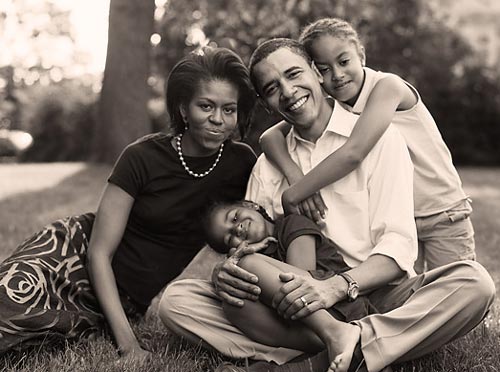
I first read this letter from World Buzz Today and got the images from Parade Magazine.

Dear Malia and Sasha,

I know that you've both had a lot of fun these last two years on the campaign trail, going to picnics and parades and state fairs, eating all sorts of junk food your mother and I probably shouldn't have let you have. But I also know that it hasn't always been easy for you and Mom, and that as excited as you both are about that new puppy, it doesn't make up for all the time we've been apart. I know how much I've missed these past two years, and today I want to tell you a little more about why I decided to take our family on this journey.


When I was a young man, I thought life was all about me—about how I'd make my way in the world, become successful, and get the things I want. But then the two of you came into my world with all your curiosity and mischief and those smiles that never fail to fill my heart and light up my day. And suddenly, all my big plans for myself didn't seem so important anymore. I soon found that the greatest joy in my life was the joy I saw in yours. And I realized that my own life wouldn't count for much unless I was able to ensure that you had every opportunity for happiness and fulfillment in yours. In the end, girls, that's why I ran for President: because of what I want for you and for every child in this nation.


I want all our children to go to schools worthy of their potential—schools that challenge them, inspire them, and instill in them a sense of wonder about the world around them. I want them to have the chance to go to college—even if their parents aren't rich. And I want them to get good jobs: jobs that pay well and give them benefits like health care, jobs that let them spend time with their own kids and retire with dignity.

I want us to push the boundaries of discovery so that you'll live to see new technologies and inventions that improve our lives and make our planet cleaner and safer. And I want us to push our own human boundaries to reach beyond the divides of race and region, gender and religion that keep us from seeing the best in each other.

Sometimes we have to send our young men and women into war and other dangerous situations to protect our country—but when we do, I want to make sure that it is only for a very good reason, that we try our best to settle our differences with others peacefully, and that we do everything possible to keep our servicemen and women safe. And I want every child to understand that the blessings these brave Americans fight for are not free—that with the great privilege of being a citizen of this nation comes great responsibility.


That was the lesson your grandmother tried to teach me when I was your age, reading me the opening lines of the Declaration of Independence and telling me about the men and women who marched for equality because they believed those words put to paper two centuries ago should mean something.

She helped me understand that America is great not because it is perfect but because it can always be made better—and that the unfinished work of perfecting our union falls to each of us. It's a charge we pass on to our children, coming closer with each new generation to what we know America should be.

I hope both of you will take up that work, righting the wrongs that you see and working to give others the chances you've had. Not just because you have an obligation to give something back to this country that has given our family so much—although you do have that obligation. But because you have an obligation to yourself. Because it is only when you hitch your wagon to something larger than yourself that you will realize your true potential.

These are the things I want for you—to grow up in a world with no limits on your dreams and no achievements beyond your reach, and to grow into compassionate, committed women who will help build that world. And I want every child to have the same chances to learn and dream and grow and thrive that you girls have. That's why I've taken our family on this great adventure.

I am so proud of both of you. I love you more than you can ever know. And I am grateful every day for your patience, poise, grace, and humor as we prepare to start our new life together in the White House.


Love, Dad


===

He really have a way with words...his charisma is sooo evident! Here's a link to his speeches!